Home / Field Notes / Pepper Season at 3,000 Feet
Field Notes
Pepper Season at 3,000 Feet
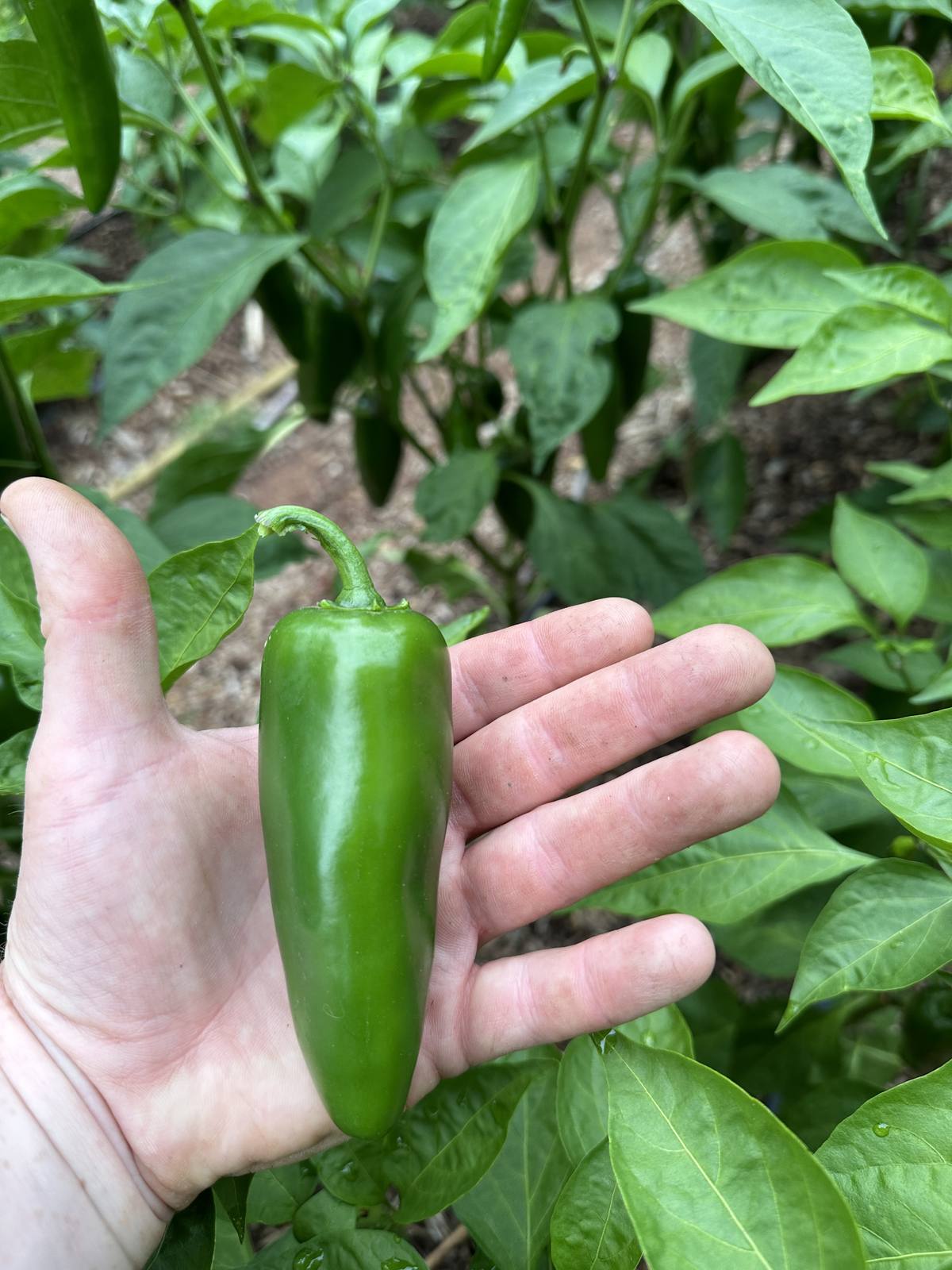
August is the month the sauce gets decided. Everything we bottle in the fall is on the plants by then, coloring up in the long, dry foothill sun — and one of us is out there most mornings checking what’s ready.
What’s ripening
At 3,000 feet in West Point, peppers come in on their own schedule: hot days, cool nights, and a season that runs late into October. When we wrote this, the jalapeños and serranos were coming in heavy, the Hatch were just turning, and the habaneros were still a few weeks out. We pick by hand at ripeness, a few times a week, and the ripest fruit goes into the kitchen the same week we ferment. The Music garlic was pulled and curing by then — no elephant garlic this year.
Why it matters for the bottle
Because we ferment instead of cook, timing is flavor. A pepper picked ripe and salted down within days tastes brighter and rounder than anything that spent a month in cold storage or a truck. So the fall bottles — the ones on the table in September and October — are literally August’s harvest, and they keep developing after they’re bottled.
What’s coming to market
In August the table had all five sauces, with Garlic Chili and Chipotle running low. Stock moves week to week, so the Farm Stand list is the best place to see what is actually on today. And if you want to see where it all grows, ask at the booth — we like talking about it.
Every bottle starts with peppers grown on the farm. Find us Sundays at the Murphys Park Farmers Market and Tuesdays at the West Point Farmers Market, or order sauce online and we’ll ship it.